Tuesday, January 15, 2013

"Dwarf" vs. dwarf

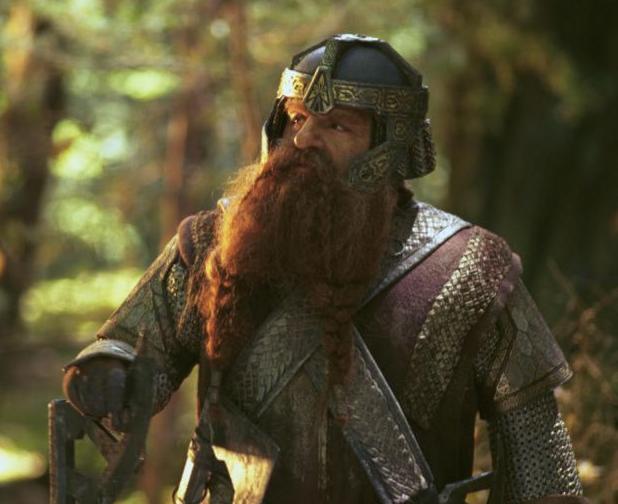
Whom do you think is the cooler dwarf?


I mention this because I believe, as Gygax did, that D&D is essentially human-centered. In my OSR game, I offer the other races for their game-mechanic benefits, but I still refer to them as humans, and encourage my players to think of them as such. At best, they may be singular representatives of a different race, but there is no concentrated population of their kin to be found in the campaign. If they truly are non-human, they are outsiders, cast-outs, strangers in strange lands.

(P.S., I love Lord of the Rings, and I think John Rhys-Davies did a great job of portraying Gimli. But swords and sorcery is a different sub-genre from High Fantasy, and s&s is the style I currently prefer, and I believe it fits the original game better.)

cheers,
Adam

Sunday, January 13, 2013

Thoughts on Multi-Classing

As I've mentioned before, I'm not fond of 3e-style "I'm a wizard, but I'm going to be a monk for this level" style class-switching. But I do think there should be room for some kind of multiclassing. If the character classes really represent years of training and study, then, how are we to model that in the game? (Presuming we aren't simply using the 1e AD&D rules.)

I like two options: one, a character can start out with two classes, representing an extraordinary background; I would require such a character to have at least 13 in the prime attributes of each class. Two, characters can gain another class later on, but I would limit it to one every 4 levels past first, and the player has to pre-declare what their character is studying to become.

In any case, once the character has multiple classes, experience must be split between them.

Since I like to start 1st-level characters with max hit points, the question becomes, which die to use? If you're a "nice" GM (and I try not to be, but who am I kidding?), you might give the best of the two. But you could also roll one die for each class, and use the *lower* result as the die type. In other words, suppose you have a Fighter/Magic-User. Roll a d4 and a d10 (depending on which version of the game you're playing, of course). Whichever die is the lowest, you use that as the basis of h.p., although you may max it at first level if you choose. So if you rolled a 3 on the d4 and a 2 on the d10, you'd start out with 10 h.p. But with a roll of 3 on the d4 and, say, 6 on the d10, you start out with M-U hit points. The rationale behind this is, the less combat-oriented one of your classes is, the less likely your character would be to have learned the skill of mitigating damage.

In this way, players can eventually free themselves from the supposed restrictions that class-based gaming imposes, without too much power imbalance as a result.

cheers,
Adam

We're All Just Playing Holmes Basic

The game is intended to be fun and the rules modified as the players desire. Do not hesitate to invent, create, and experiment with new ideas. Imagination is the key to a good game. Enjoy! --J. Eric Holmes

With that in mind, if anyone asks me what my home-ruled OSR mish-mash is called, I just say it's Holmes Basic. Even though the rules differ, and sometimes radically, from that wise tome.

cheers,
Adam

Wednesday, January 9, 2013

Late to the Party, Again

Since I've only just recently replaced my stolen laptop, I wasn't able to be the first on the block to share this news, but I'd be remiss in my duties as a self-proclaimed general in the OSR if I didn't mention the Deluxe Tunnels and Trolls Kickstarter. They've already hit their funding target, but I'm sure more money wouldn't hurt the end product. And a lot of the old gang have their input, too: Liz DanforthJim "Bear" Peters, and Steve Crompton are working along with Ken and Rick. It looks very, very promising.

cheers, Adam

The Ringing and The Singing of the Bell's curve


How the danger sinks and swells,
By the sinking or the swelling in the anger of the bells -
Of the bells -
Of the bells, bells, bells, bells,
Bells, bells, bells   -- Edgar Allen Poe, "The Bells"

(This is a sorta-followup to this post, just so you know.)

I've been knocking about the idea of replacing a d20 "to-hit" roll + damage with 3d6 + static modifier. Suppose a sword does 1d8 damage and a 1st-level fighter with no BAB needs to hit an AC 16 target. What is the expected damage done? Assuming an average roll of 4.5 points of damage x 0.25 (25%) chance of hitting, you have 1.125 points inflicted per round.

Now, suppose we use 3d6. Alone, 3d6 have a 4.63% chance of rolling 16 or higher. So that translates, with an average d8 die roll, to .208 points per round. But here's the trick: rather than rolling damage, the sword adds a static number to the 3d6 roll, and additional damage is determined by subtracting the AC from the eventual result. Assuming the sword gives a static 5 point bonus, we get a 25.92% of hitting, on average, 4 points, or 1.0368. Fairly close.

The idea behind this is, people are often going on about how high rolls on a d20 should somehow represent that their attack was extra special. These people do not understand the difference between a bell curve and a linear distribution, but if we don't want the fun experience of having a high "to hit" roll to be spoiled by rolling 1 for damage, we need to swap out systems.

In d20, people like to have at least the possibility of doing extra damage on an unmodified, or "natural" 20. How would we model that in 3d6, you might ask? One answer would be to swap something from the latest edition of Tunnels & Trolls: the concept that doubles and triples add and roll over. So if you roll 5,1,5, you take the two fives, re-roll them, and add that number to the total; say the second roll is a 2 and a 4, you have a total of 17, plus the static +4 bonus for the sword. Now you've done 5 points of damage. If those had been 2 and 2, you would roll them yet again.

(To be accurate, in T&T you only add and re-roll doubles when rolling two dice, and triples with three, but the principle isn't that far off this way.)

The numbers seem to work out if you take half the maximum die roll and add one, so a d4 gets 3, a d6 gets 4, etc.

Now, some purists would accuse me of tainting our dear retro-D&D play with such blasphemous bell-shaped results, but I think this is perfectly within the spirit of the OSR, since this is a simple mechanism that can be swapped out with the existing one without changing any other element of the game. (Magic swords that have different bonuses "to hit" and for damage might be a problem, but consider reversing the adds: a sword, +3 to hit and +1 damage becomes +1 to hit, but +3 damage. So our average damage becomes 3 points. A 40% chance of getting 5.5 points with the traditional system equals 2.2 points. Tweaking the numbers, +1/+2, gets us closer, at 2.72 points. Taking doubles and triples re-rolls into account gets us closer still.)

cheers,
Adam
Friday, December 7, 2012

A Question of Quests

I'm not one to quibble about semantics, usually. But one commonly-misused word is really grating to my ears. I'm not talking about trivia like 'irregardless' or 'begging the question'; if you use the first or misuse the second, you're only making yourself look silly. That's no skin off my nose. No, the word I can't abide being abused is one that is commonly tossed around in RPG circles, especially since the advent of MMORPGs.

That word is quest.

This was the offending use that broke this particular camel's back. Someone referred to his adventure as a "simple fetch quest". I refrained from commenting, but that trivialization of what was once an awe-inspiring term has been gnawing on me for a while now.

If something is "simple", then, by definition, it's not a quest. A quest is an arduous search for something that severely tests the mettle of any party bold enough to attempt it. It is epic in scope, and poses extreme challenges and perils along the way. Think of the Holy Grail; Odysseus' return; Jason and the Golden Fleece; and (do I even have to mention it?) the destruction of the One Ring. A quest changes you, and not always in pleasant ways. "Simply fetching" something isn't a quest: it's a Chore, perhaps, or even an Errand, but it's not a quest.

I don't know when this depreciation in meaning began; for all I know, it started with MUDs, or maybe even with television, outside the gaming realm altogether. But I hadn't heard it much until World of Warcraft became the phenomenon that it did. I've never played the game, but my former roommate was an addict, and he would throw the term about casually, labeling as "quests" such non-epic tasks as escorting a merchant, killing X number of goblins, or retrieving a low-power magic item from a known location. "Quest-givers" were NPCs wandering around the city with question marks over their heads. The character record could even list which quests--plural--your avatar is currently pursuing, a kind of fantasy "to-do" list.

Maybe it's just me, but I just don't see Frodo ticking off "Destroy Ring" on a sheet of paper and then looking down to see if there's a Grail he needs to pick up somewhere.

Now, anyone who thinks that the best first response to something is to head to the Web and correct people's usage is living in a very different world than I am. But it's good to get things off your chest occasionally, and to whomever finds their way to this blog, I advise you not to engage in any arguments about it. Just use more precise terminology yourself; calling something a Task is dramatic enough, and a hard one might even be called a Labor. But let the word Quest settle for a while; it will be that much more awe-inspiring when you have a legitimate chance to use it.

cheers,
Adam

Friday, November 30, 2012

An Experiment in Narrative Form

Random Idea:

Most role-playing is done in present tense, in first- and second-person narrative, at least in the case of the PCs. ("You see an eerie red light emanating from behind the throne.")

But if we could get everyone on board with using third person for PCs exclusively, players and GM, and using the past tense, what kind of psychological shift might we find in the way we play? Something like:

GM: After opening the door, they saw an eerie red light emanating from a throne at the other end of the room.

Player: Magda approached it carefully, holding her staff in front of her.

(Dice and game rule stuff happens.)

GM: Suddenly, a shadow flickered from within the red nimbus, and a creature like the shadow of a long, hungry panther leapt out at her. It clawed, but a shield of light sprung from Magda's staff, protecting her from its claws.

This could be cool. Or totally dorky. But I like the idea, for now.

cheers, Adam